Every girl is born with lifelong supply of eggs in her ovaries, at the age of menarche every month, a single egg matures from any of the ovary and released. In absence of fertilization it turns in menstrual flow. This is normal phenomenon in every girl indicating that a girl is sexually mature enough to conceive.
Poly cystic Ovary Syndrome (PCOS) is a hormonal disorder. The name “poly cystic” suggests one might have multiple ‘cysts’ in her ovaries, but not all women who have PCOS have multiple ‘cysts’ and not all women who have multiple ‘cysts’ have PCOS. The cysts are actually not cysts but partially formed follicles which contain an egg.
It is basically a modern life style disease which is slowly creeping in to society and is affecting women’s health in many ways.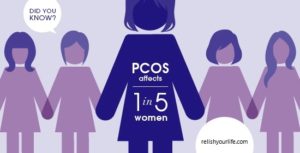
Medically Speaking “PCOS is a common endocrine system disorder among women of reproductive age. Women with PCOS may have enlarged ovaries that contain small collection of fluid called follicles, located in each ovary as seen during an ultra sound scan”.
All women produce small amounts of androgen in tissues including the ovaries and the adrenal glands. High levels of androgen can prevent ovulation and affect the menstrual cycle.
- Usually develop around the late teens and early twenties
- Every 5th female of childbearing age (20-40) have PCOS
- PCOS can run in families suggests that there is a genetic component to the disease
- It varies from case to case very few women have the same set of symptoms.
Symptoms of PCOS
PCOS symptoms present in many different ways, and some women will have only some, or mild symptoms, whereas others will have severe symptoms. Now let’s know them in detail;
Irregular Periods
Although some women with PCOS have regular periods, high levels of androgen and also the hormone insulin can disrupt the monthly cycle of ovulation (when eggs are released) and menstruation.
In PCOS periods may be “irregular” or stop altogether. The average menstrual cycle is 28 days with one ovulation, but anywhere between 21 and 35 days is considered “normal”.
An “irregular” period cycle is defined as either “eight or less menstrual cycles per year” or “Menstrual cycles longer than 35 days”.
As menstrual cycles lengthen, ovulation may stop entirely or only occur occasionally. Some women with PCOS also experience heavier or lighter bleeding during their menstrual cycle.
Lower abdominal Pain
Intermittent pains in lower abdominal region may indicate early signs of PCOS
Excess hair (hirsutism)
Excess hairs on the face and body due to high levels of androgen are being stimulated by the hair follicles. These excess hairs are thicker and darker. The hair typically grows in areas where it is more usual for men to grow hair such as the side burn region, chin, upper lip, around nipples, lower abdomen, chest and thighs.
Hair loss (alopecia)
For some women with PCOS, the high level of androgen causes hair loss or thinning of the scalp hair in a ‘male-like’ pattern (receding frontal hair line and thinning on the top of the scalp).
Acne
In PCOS, the higher level of androgen can increase the size of the oil production glands on the skin, which can lead to increased acne. Acne is common in adolescence, but young women with PCOS tend to also have more severe acne. In some cases it is also related with excess consumption of dairy products.
Weight Gain
A quick weight gain may trigger alarm for a women, it may not be the only symptom but it is very closely associated with PCOS.
Reduced fertility
High levels of androgen and high insulin levels can affect the menstrual cycle and prevent ovulation (the release of a mature egg from the ovary). Ovulation can stop completely or it can occur irregularly. This can make it more difficult for women with PCOS to conceive naturally, and some women can also have a greater risk of miscarriage. However, this does not mean that all women with PCOS are infertile. Many women with PCOS have children without the need for medical infertility treatment.
Psychological effects
For a female loosing femininity is a big concern. Depression and anxiety are common symptoms of PCOS. There may be some link to hormones and PCOS but more research is going on to establish the fact.
Sleep Apnoea
Sleep apnoea occurs when the upper airway is obstructed during sleep. Excessive fatty tissue in the neck can partially block the airway leading to sleep loss, fatigue, tiredness and reduced quality of life.
Coping with excessive hairs, severe acne, weight changes and fertility problems may affect body image, self-esteem, sexuality and femininity. This may add to depression and anxiety levels. Problems with fertility can impact on mood, particularly if fertility has been a concern for a long time. On top of all of this, a delayed diagnosis of PCOS and problems with weight management can make the patient feel discouraged and helpless. So identify it quickly and start for its remedial action so that you can relish your life.
Read more about PCOS, follow the links